Read the wood.
Tap through eight marks on an old board: nail holes, saw marks, adze scallops, checks, worm tracks, patina, knots and old paint. Each one tells you something about where the wood has been.
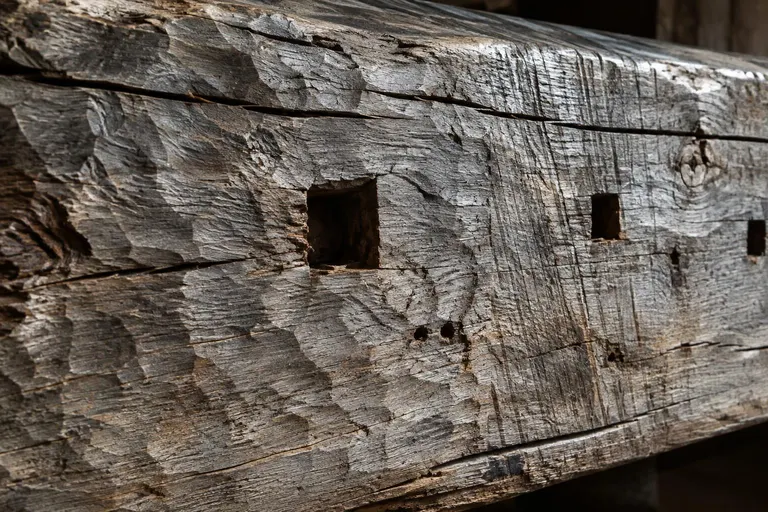
Eight marks, every one explained.
Tap a numbered mark on the board, or pick one from the list.
Try the wood in the studio.
Pick a wood and a layout and watch the boards get nailed up on a sample wall.
- Look
- --
- Character
- --
- Order extra
- --
- Planning price
- --
- Our take
- Press Nail it up
Change the wood, the layout or the finish and the wall is nailed up again. Slide the light from morning to evening and watch the grain change.
The details behind a good board.
Marks are character
Nail holes, checks and saw marks are part of what you are buying.
Age is in the surface
Real patina builds over decades and cannot be convincingly printed.
Dry matters
Boards must be dried for indoor use or they will move.
Metal hides
Even careful crews miss a nail, so carpenters scan before cutting.
Grade is a choice
Cleaner boards and heavier character both have their place.
Get your number
Photos and measurements turn all of this into one written price. Ask for my quote
About old wood: common questions
Is reclaimed wood the same as barn wood?
Barn wood is one kind of reclaimed wood. Reclaimed also includes heart pine and oak from old floors, beams from mills and warehouses, chestnut from old farm buildings and timbers from other structures that have been taken apart and given a second life.
Is reclaimed wood safe to cut and install?
Boards are de-nailed, metal-scanned and dried before they are sold, which makes them much safer to cut and stable indoors. Old paint can contain lead in buildings from before 1978, so ask us about any painted board and never dry sand it.
What is the difference between hand-hewn, sawn and faux beams?
Hand-hewn beams were shaped with an axe or adze and show scalloped tool marks. Sawn timbers have straight saw marks and are more uniform. Faux or box beams are hollow and light, made from reclaimed boards. Structural beams need a builder or engineer to approve the size.
Want to see the marks in person?
Ask for sample boards. Nothing beats holding a hundred-year-old board.